


EVENTS
Event Highlights
Sichuan Chengdu Archaeological & Cultural Exploration
2024-01-31
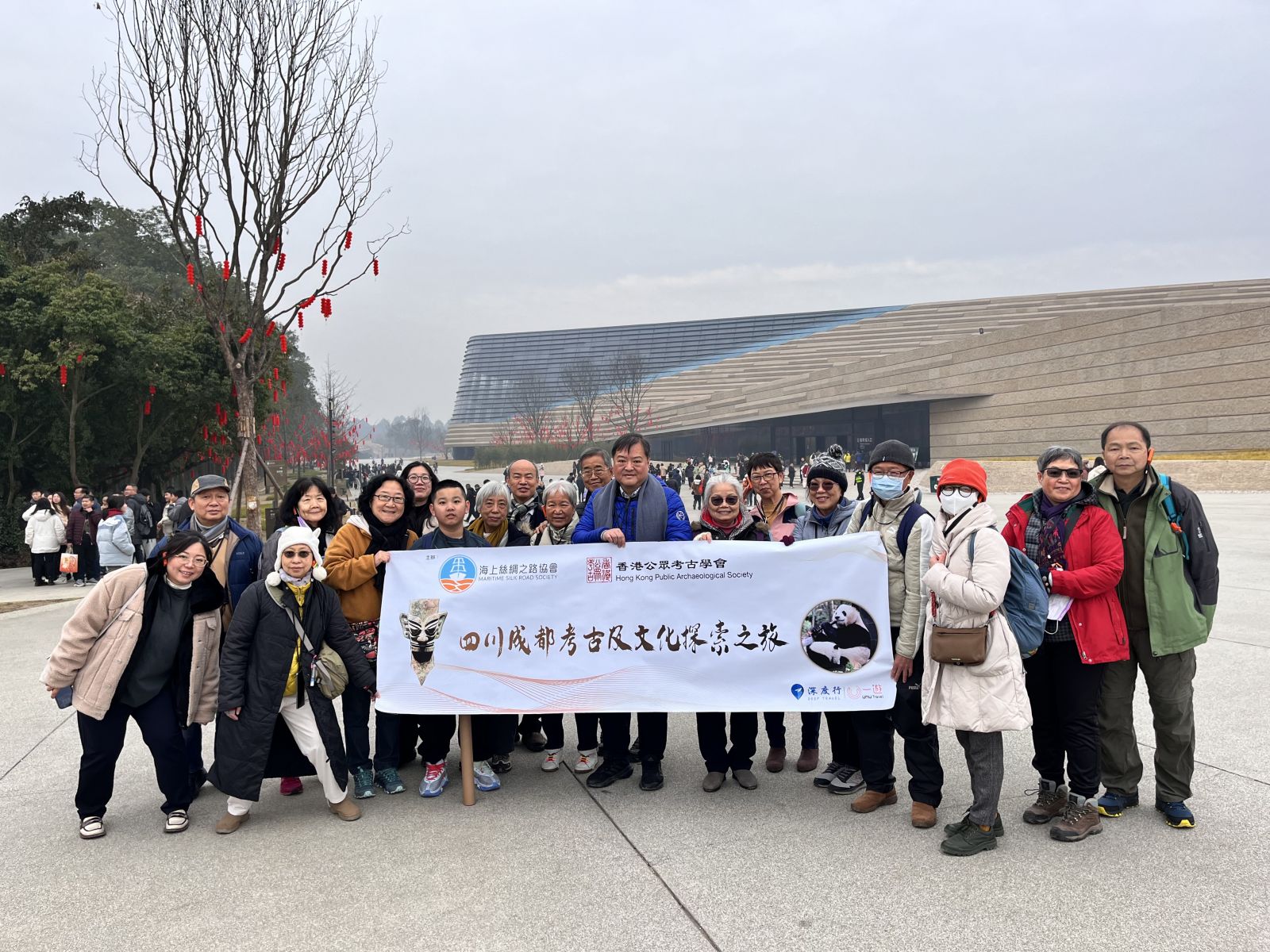
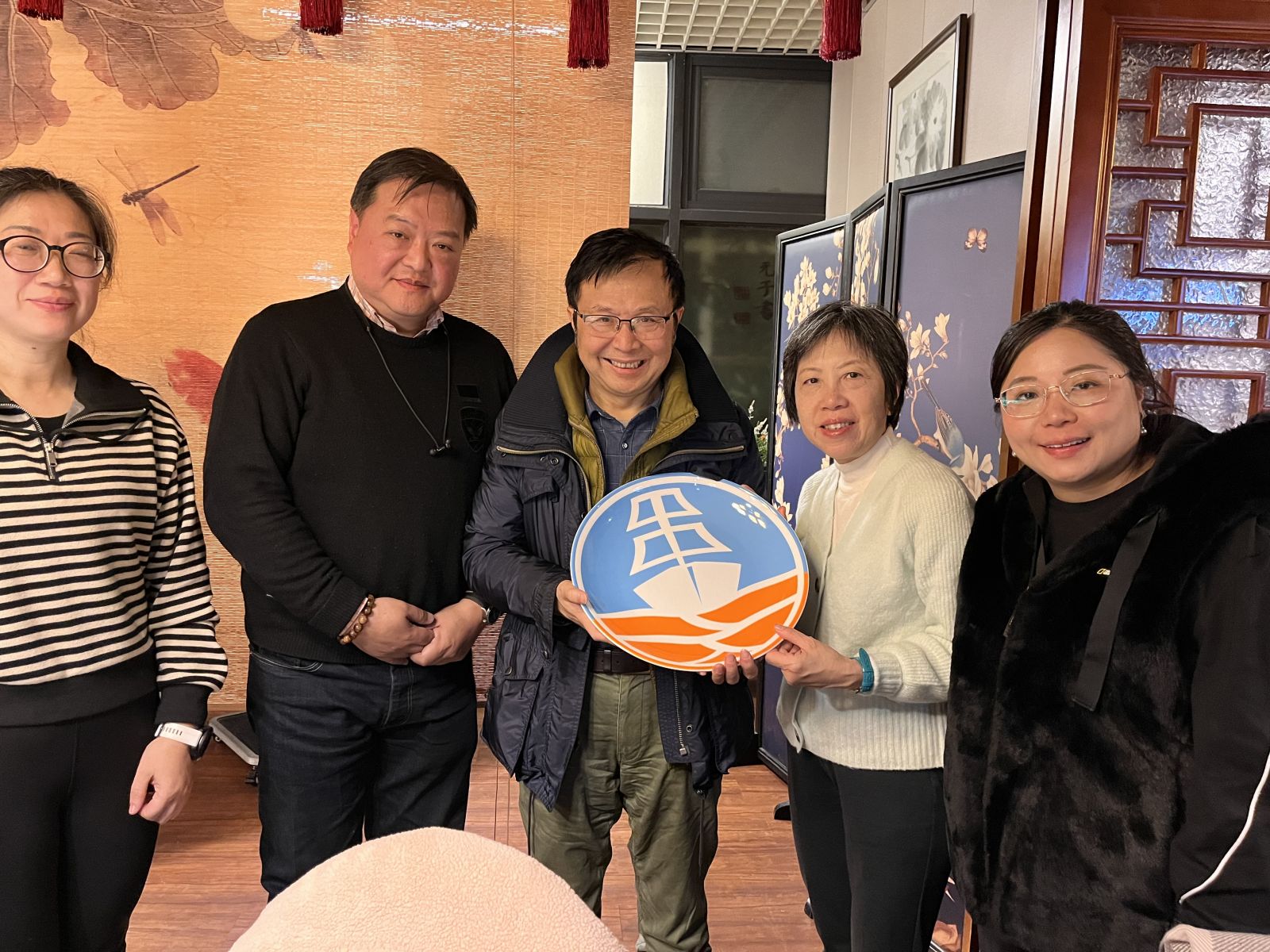
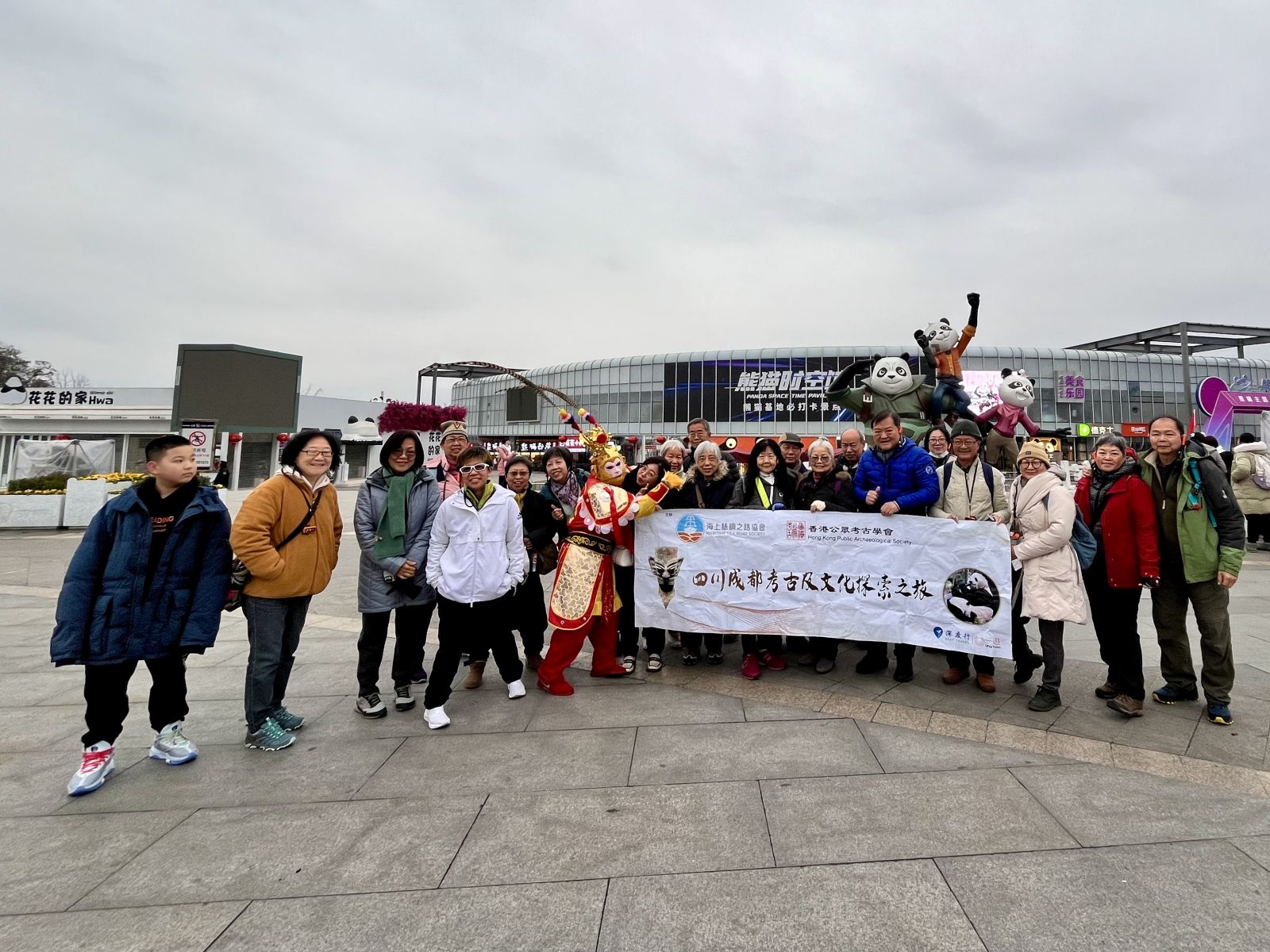
The Maritime Silk Road Society, with Hong Kong Public Archaeological Society as co-organizer and Deep Travel as contractor, organized the “Sichuan Chengdu Archaeological & Cultural Exploration” on 31 January – 4 February to deepen public’s understanding of Chinese history and culture and to promote archaeological advancement.
The programme of the first day featured hot pot dinner for the delegates while enjoying a face-changing operatic performance. In the night time, members strolled along the Jinli Ancient Street to experience the architecture and commercial activities of "The First Street of Shu Kingdom" in Chengdu.
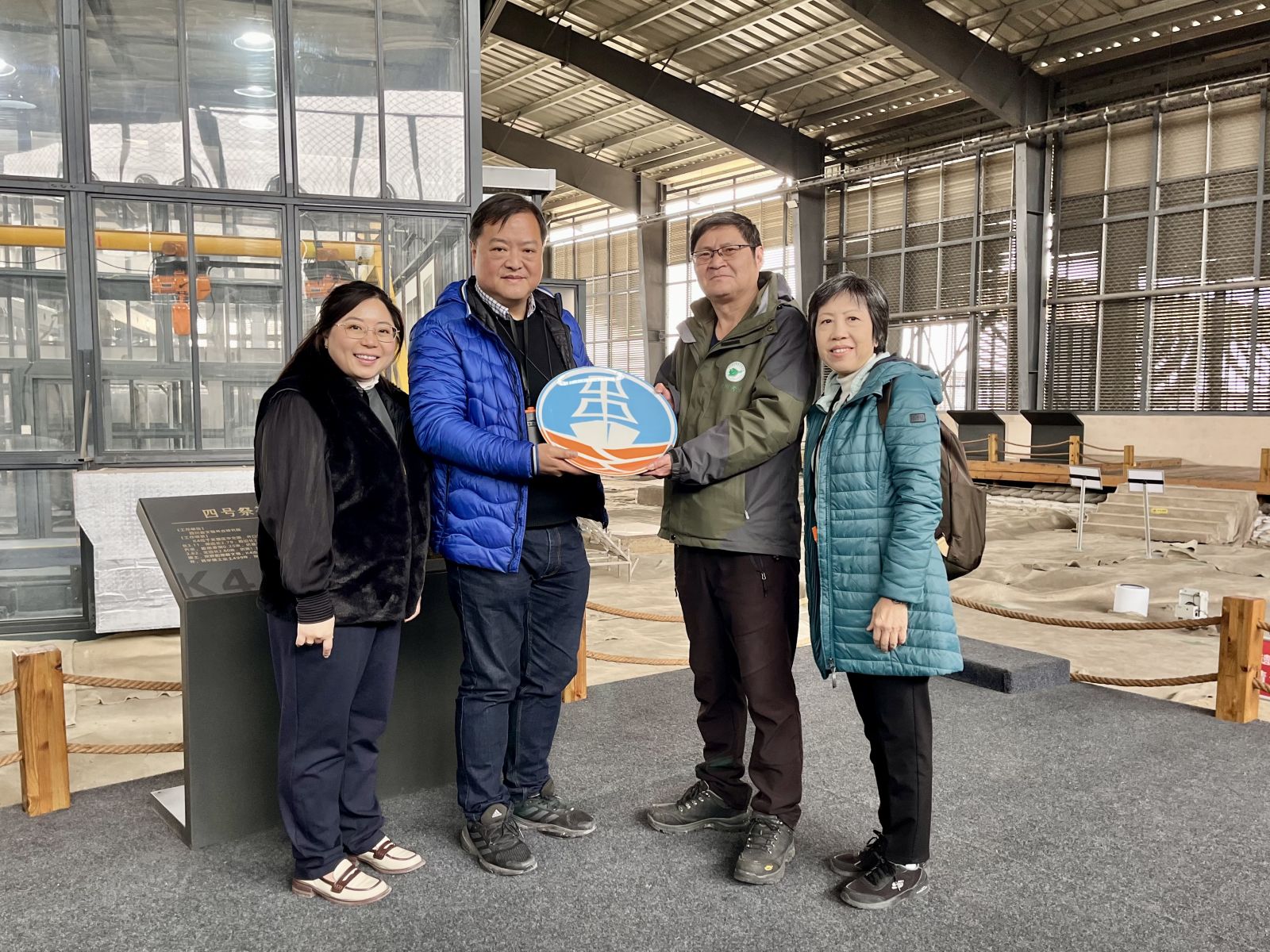
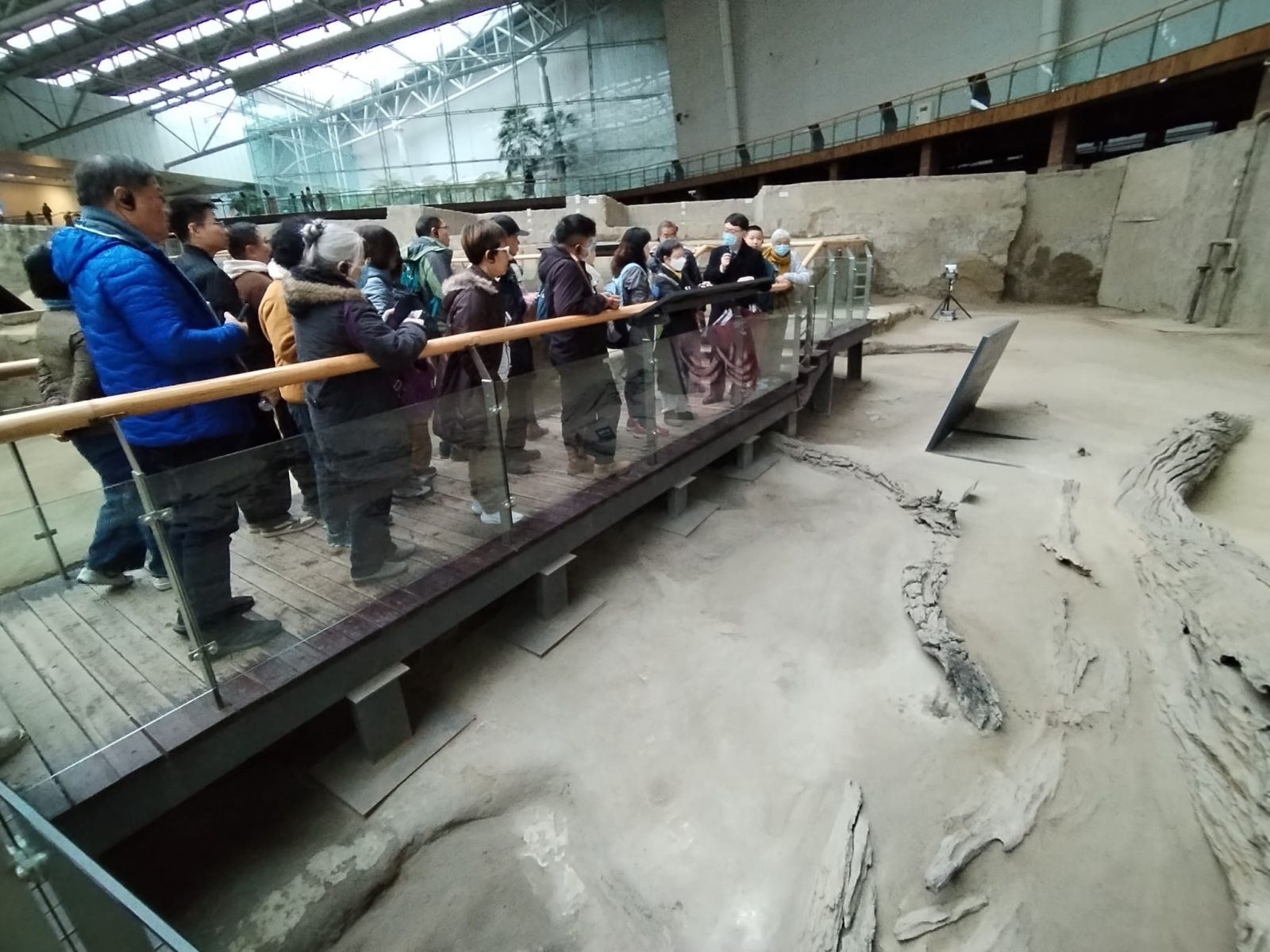
With Sanxingdui archaeology as the theme for the event, the tour started with Sanxingdui Museum in Guanghan on the second day. Led by Dr Peter Wong, Founder and Secretary of the Hong Kong Public Archaeological Society, delegates enjoyed viewing exquisite objects such as the bronze sacred tree, the gigantic standing figure and sacrificial altar which reflected a glittering chapter in ancient Shu history, as well as the diversity, unity and long history of Chinese civilization. In the afternoon, the delegation proceeded to Sanxingdui Site’s Archaeological Shed in Sacrificial Area to receive a thorough on-site briefing on the excavations and application of technologies by Mr Wu Changyuan, field expert at the Sanxingdui Archaeological Research Institute of the Sichuan Provincial Cultural Relics and Archaeology Research Institute.
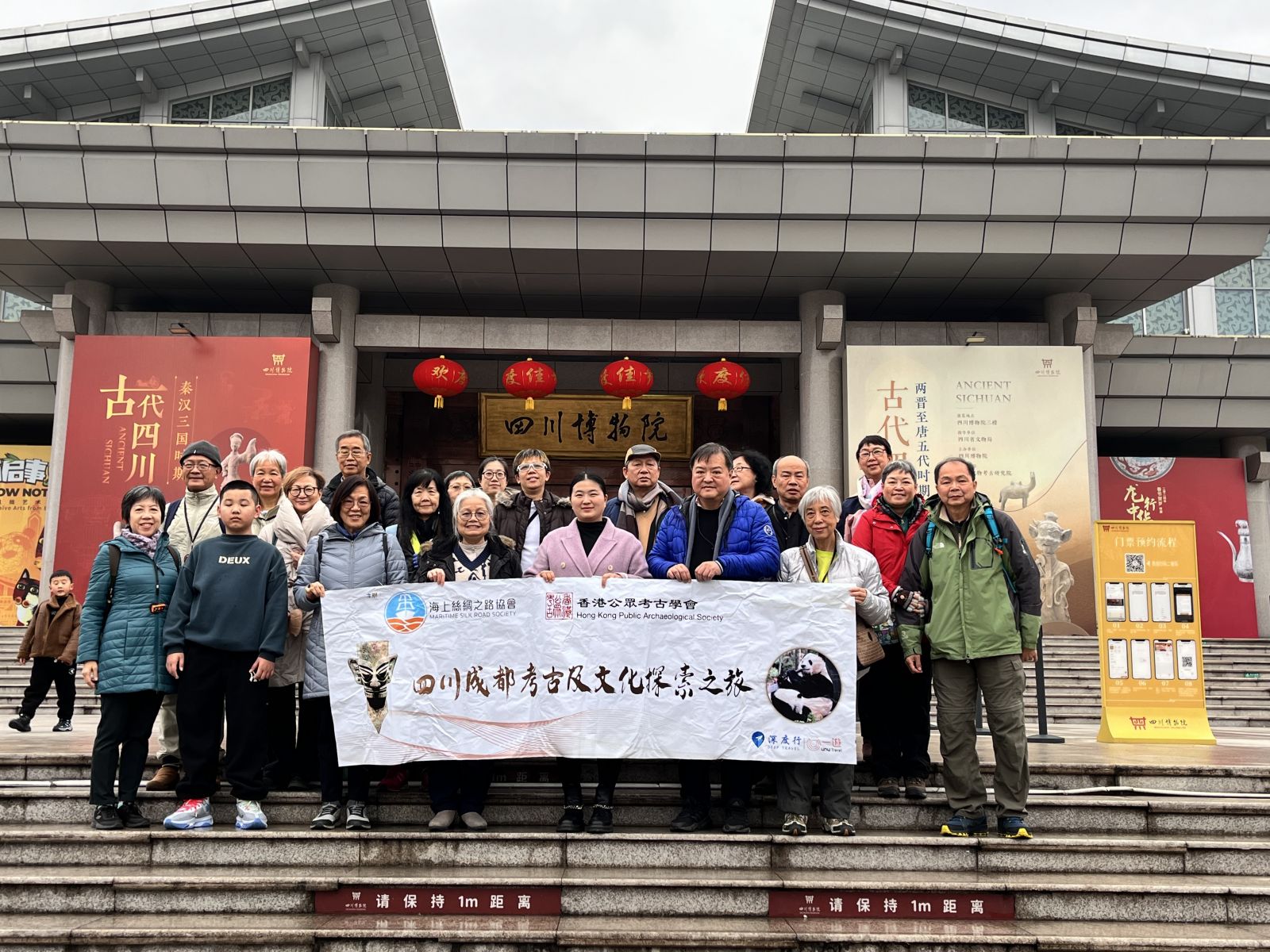
On the third day, participants visited the Jinsha Site Museum, which comprehensively demonstrated the glory of the Jinsha Kingdom of ancient Shu from multiple perspectives such as archaeological sites, ecological environment, production and life, religious sacrifices, and cultural background. In the afternoon, participants visited Sichuan Museum. Established in 1941, the museum is a comprehensive national public museum that stages permanent exhibitions on general history, as well as thematic exhibitions on art history such as national cultural relics, arts and crafts, and pottery art of the Han Dynasty. At twilight, the group browsed the Kuanzhai Alley which is composed of three ancient alleys to experience the cultural center located on the ancient streets and to taste local specialties. During the dinner gathering, the delegation learned about the latest development of archaeology in China from Mr Gao Dalun, Director of School of Archaeology and Museology of Shanxi University.
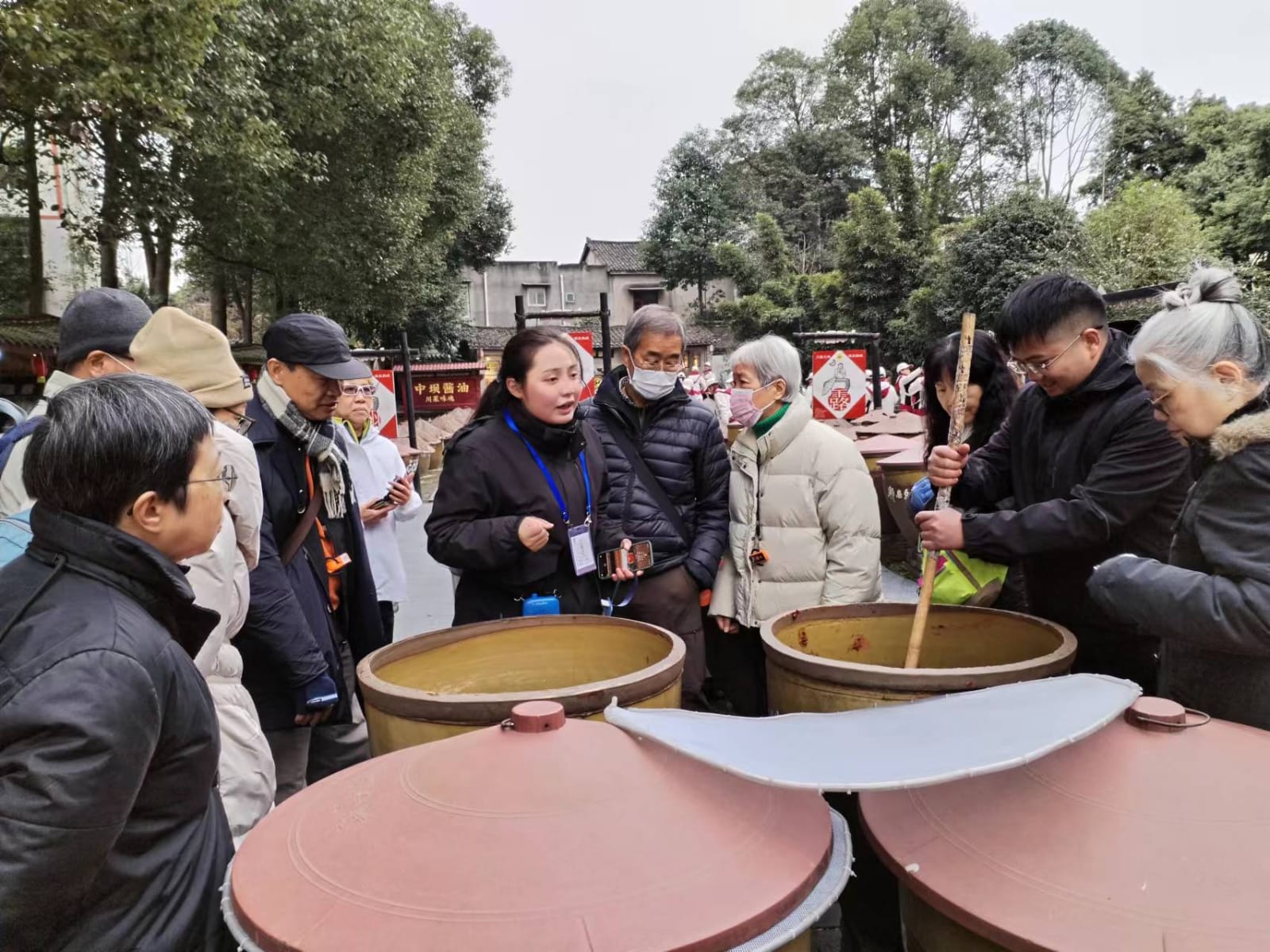
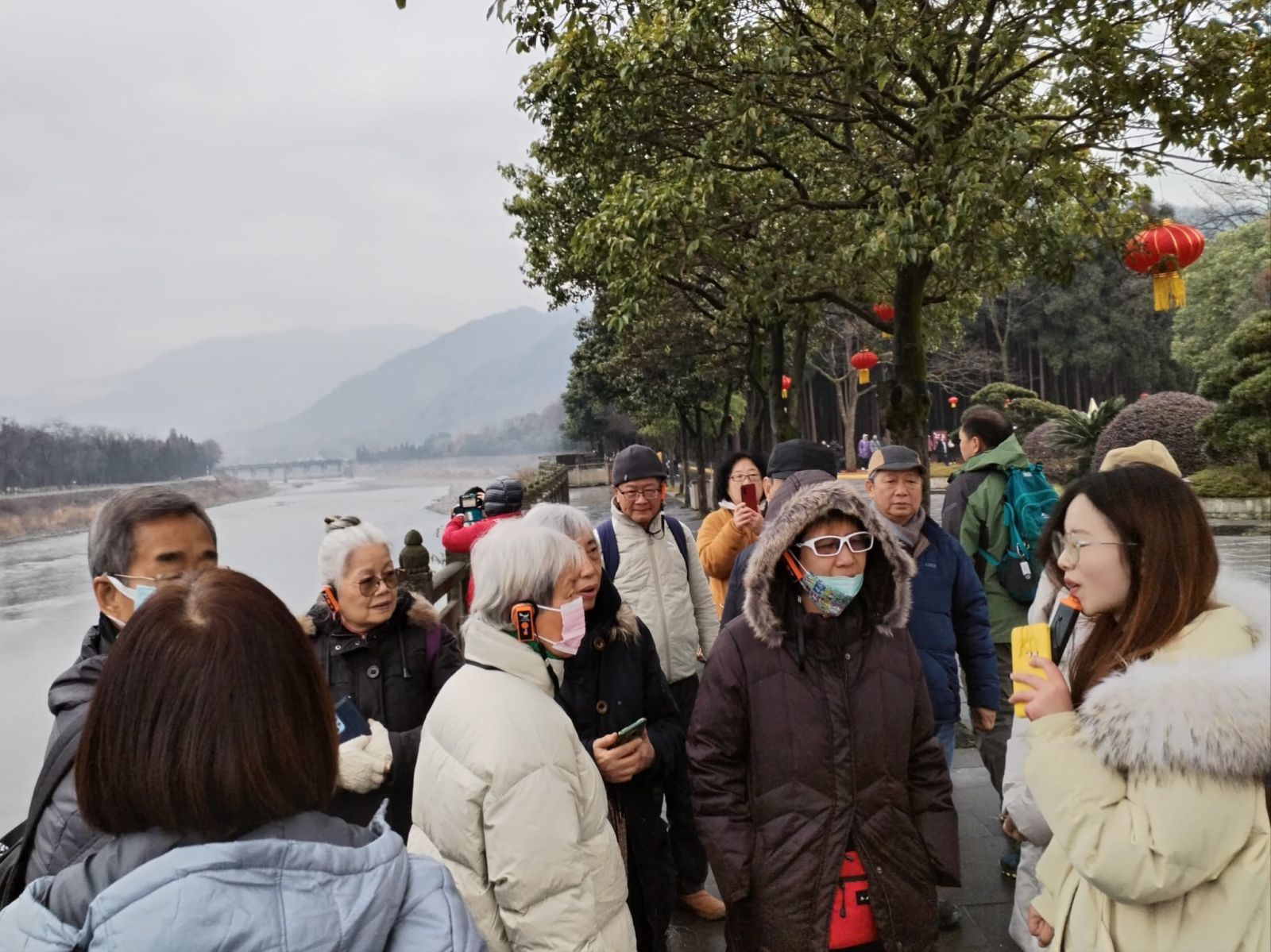
On the third day, the group visited the Chengdu Research Base of Giant Panda Breeding (Panda Base), had a close encounter with the national treasure giant pandas and learned about their living habits. At noon, the delegation arrived at the Sichuan Cuisine Museum (Chuançais Museum) for lunch. The museum is located in Sandaoyan Town of Pidu District. It has a history of 3,000 years and was once a trading centre on the Southern Silk Road. It is a living museum featuring gastronomy culture and food tasting. The delegation travelled to Dujiangyan in the afternoon for viewing the ancient irrigation system in the City. The Dujiangyan Irrigation System, begun in the 2nd century BCE, is a major landmark in the development of water management and technology, and is still discharging its functions perfectly. Together with Mount Qingcheng, Dujiangyan Irrigation System was inscribed on the list of World Heritage by UNESCO in 2000.
The delegation visited the Chengdu Wuhou Shrine on the last day. The historical site is China’s only shrine where emperor and ministers of Shu Han, including Zhuge Liang and Liu Bei, are venerated on the same spot.
With fascinating stories told by the tour guide amid ancient architectures and a warm morning that coincided with the beginning of spring, the five-day programme came to an end in the middle of Chengdu’s cultural relics.
.jpg)
.JPG)
